Showing posts with label Morsi. Show all posts

October 22, 2013

What Egypt can learn from Hypatia Alber

I'm not the type to go into frenzy over a baby, I shamefully admit it. It is not, because I don't love children, on the contrary, I adore them and believe they are our most precious key to a future. But in general I feel – other than the parents escorting them – that one baby in a pram pretty much looks like the next, a little ruffled, much confused over the many faces that pop up over the limited horizon the little carriage offers, not very communicative – and often plain asleep. While I of course understand that to the mother or father next to it this baby is, no questions asked (dare you), the most wonderful, beautiful baby that ever graced the face of the earth, I – silently – beg to differ but naturally assure the good parents that this indeed is one exceptional offspring. Which is true, seeing it is theirs and not somebody else's. So I am not really lying.

There is one baby however that has truly captured my heart for many reasons these days. And yes, even I find that she's not only exceptionally nice to look at (who could not fall for this cute smile?) but also someone very special, with a really beautiful name to go by: Hypatia. Hypatia Alber.
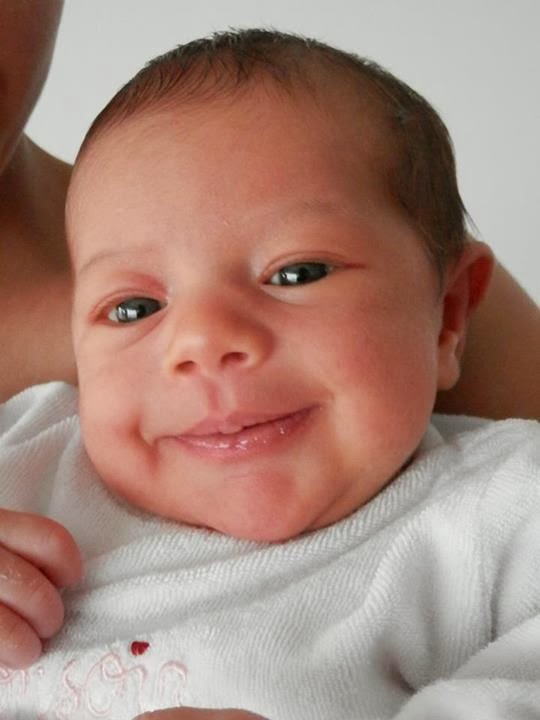
The little one was just recently born by her mother to the most proudest father you probably can come across, one, who already posted photos of her when she was still inside her mother, constantly having her hands at her head and her head often down to which he excitedly exclaimed: "That's my girl!"

He should know. For he is a man who uses his head a lot himself and almost got killed over this only a year ago: Alber Saber.

For those, who are not familiar with his story, which I wrote about a year ago on this blog (Alber Saber - And all is well in Egypt), let me give you a quick sum up: Egyptian, intelligent, 27 years old, thinking aloud about religion and God and trying to find his way in the labyrinths called religions. A Copt, I should add. And all and all, in the Egypt that was 'ruled' by President Morsi and the Muslim Brotherhood this was a toxic mixture.

A year ago this time, Alber Saber rotted in an Egyptian jail, awaiting the outcome of his trial for alleged blasphemy. In the aftermath of the riots around the vile anti-Islam movie "Innocence of Muslims", tensions against Copts ran high and Alber's posting of his contemplations on religion angered his Muslim Cairo neighbours who on 12 September stormed the house where he was living with his mother and threatened to burn the place down – with them inside. In their fear, mother and son called the police to protect them, but when the Egyptian police arrived and barely were able to make their way through a hateful, shouting mob, there was no interest to protect the Copts. The police sided with those attacking them instead, confiscated Alber's computer and arrested him, leaving the fear stricken mother alone with the death threats hurling crowd.

What followed was horror

Alber they took to the police station where he was thrown into a cell with criminals, not without shouting first that he had insulted God and was an infidel, so that the cellmates turned on him, beat him badly, and one slashed his neck with a razor blade. He had to spend the rest of the night in a corner, bleeding and scared and not knowing if he would ever come out of this alive.

His trial lasted almost three months and was an incredible, hate filled farce. On 12 December the judge ruled that Alber, in criticising religion, had incited 'tensions among Muslims and Christians' and therefor was guilty. The verdict: three years in prison. The chances of him ever getting justice in an Egypt full of sectarian strife under Morsi and the Muslim Brotherhood had been crushed.

Five days later, as an appeal had been launched and due to the publicity his case and the unjust verdict received world wide, Alber Saber was freed on bail until the resuming of his trial in January 2013. On the day his appeal case was to start, Alber Saber had left Egypt. He knew, he would never get justice if he stayed.

The months that followed for him in Europe were both challenging and depressing. The freedom he gained was a wonderful gift, yet being torn apart from his family was extremely hard. He missed his wife, his mother, his friends. But had to grit his teeth and go on. His safety was at stake.

Then slowly things began taking good turns. The family situation became sorted out and a safe place to live was found. With a heavy heart still over Egypt and those left behind Alber Saber started to do what was his right as a young married man, to live and to love. And to become secure in his life.

It was at this time that a little human started to appear on the horizon, shy at first but bigger and bolder as the months went on, and a living proof that even after troubling times in an Egyptian jail good things can come out of it if you are released on bail. For this little one was conceived when freedom was restored, and it was for her the most that Alber had to make sure he would not rot in prison but be free when she would decide to enter this world.

And enter she did. With a smile so cute, it melts your heart, with wide awake, open eyes to observe and take in, with a twinkle in those eyes, as if trying to say that living after all is real fun and should be enjoyed and that sorrows surely are not part of the universe – and if ever they were may easily be forgotten.

Hypatia, as she so beautifully was called, was the biggest triumph over sectarian hate and police brutality and rotting in dark cells with cockroaches, violent guards and aggressive inmates. She was – and is – the epitome of life and what it is all about: Hope and humanity, compassion and happiness, and the wonderful right to own a future. For everyone. Even for her father who, only a year ago, had to endure such horrors.

The truth about being a father

It was one of the most dreaded parts of Mubaraks rantings, when the old dictator kept referring to Egyptians as 'my children'. When he called the men and women of Egypt 'my sons' and 'my daughters', though he never had a hand in their coming to this world and even less in their making a living and being allowed to live. While he named himself their father, he did not hesitate to make their life hell, neglect them, terrorise them, allow them to be beaten, arrested, tortured and even killed. Something a true father would never have done.

After he was gone, others came pretending to be different but picking up the same sick line of 'my children' and the farce of being a loving father. They too now are history, and how much the current strong man of Egypt, el-Sisi, feels to be the father of Egyptians has yet to be seen. But the well known, albeit dreaded, version of fatherly love from above is lurking once more around the corner.

Enters Hypatia again, full of innocence and natural trust, crouching into the arms of her real father, who could not be prouder and happier, and teaching those old Egyptian wanna-be fathers the simple lesson what being a father to a child really means. Three words are needed only: Love, security and trust.

If you see Hypatia's face, you know what Egyptians expect from their fathers and what they deserve. It is, with all those father figures, high time that the expectations finally are met.

If anything, Egypt can learn a lot from Hypatia and her wonderful smile: That it is worth living more than dying, that trust is the essence for happiness, and that without true, compassionate love, people should not even dream of calling themselves fathers. Only in the arms of a father of love, says Hypatia, can I cuddle securely, dream my little dreams of happiness and fall soundly asleep.

Which she promptly does.


Hush, Egypt, hush. It is time to become quite and contemplate what life is really about. From the darkness of jail hell to the brightness of pure happiness is but a short way. Choose the latter, come on. And while you still ponder on this – make sure please that you don't wake the little one. Psssst ...


----------------------------------------------------------------

All pictures © Alber Saber - reproduced with kind permission


January 08, 2013

Talk of the Town: Robert Becker - The NGO trial and the assault on dignity

In December 2011, eight months after the revolution toppled Hosni Mubarak, Egyptian police raided the Cairo offices of 10 NGOs that had been working on monitoring elections and educating both parties and voters. Included were four American NGOs - the National Democratic Institute (NDI), the International Republican Institute (IRI), The Freedom House and the International Centre for Journalists. A total of 43 persons, including 19 Americans, were accused of violating the law by not filing registration paperwork fully in accordance with the Egyptian law and therefore receiving illegal funding from outside the country. Amongst others, the German Konrad Adenauer Stiftung was also implicated after having worked in Egypt with the full knowledge and approval of the Egyptian government for over 30 years.

The accusations were widely seen as absurd, especially as many NGOs had indeed filed registration papers that were lying in Egyptian offices for years without anyone dealing with them.

The impact of this surprise raid and the subsequent diplomatic row on international relations was immense, especially with Germany and the US. It was finally temporarily resolved, when the Egyptian government – in return for a substantial payment of million of dollars bail – allowed the foreign staffers to leave the country on March 1 on a US military plane.

One American however did not board the plane: Robert Becker, Political Party Trainer and Election Observer with the NDI, stayed in Egypt despite his NGO employer demanding him to do otherwise. Together with his Egyptian staff he has been facing the ongoing NGO trial ever since, spending almost every 4 weeks for hours in a cage at the Cairo court hoping that one day the verdict will show, that they are all not guilty and can go free.

The next session in the NGO trial will take place on January 10 at 10 a.m. After a year of stressful times spend in a slow-grinding trial it seemed a good time to ask Robert Becker about his motives to stay behind, about the impact the trial has on his life and the life of his Egyptian colleagues, and about the future after a verdict that hopefully will speak in their favour.


PART 1 
The raid - the charges - the interrogation - the training of parties and voters


The raid was a complete surprise to us.

There was no warrant. There was no explanation. They seized files, computers, pretty much stripped the building.

I learned from the charges via twitter. There was a news conference from the prosecutor that a journalist from AJE tweeted. That's when I saw my name and learned I was charged. This is not the usual way it's done.

This was a surprise. This was a real setback for Egypt coming out from the Mubarak regime.


PART 2 
The plane left without him - fired by NDI - in clash with US foreign policy - Fayza Aboul Naga started this smear campaign


I got fired. Did it upset me - yeah, it did. On the other hand I did defy direct orders.

It was an assault on civil society and I personally decided that it was a fight worth fighting.

There was a working theory: If all the foreigners left, the Egyptian government would go easy on the Egyptian staff. To which I countered my working theory, that if all the foreigners leave, they might retaliate against the Egyptian staff.

If democracy is to survive in Egypt following the revolution, the citizens have to be a part of it. People have to not fear organising at the local level. - This democracy won't survive without the active participation of the Egyptian people.

How dare we as an American NGO come to this country and preach democracy and preach human rights - and the first time that we get hit with some paperwork felonies the instinct is to run.

All NGOs felt that they were very wronged in this raid.

The 15 of us that are standing in the cage - I think we all wish our governments would be a bit more vocal.

So far there hasn't been any evidence presented against us.

If you ask me who started this and who I would pin the blame on I would say former Minister Fayza Aboul Naga.

Her testimony was rather outstanding. She proved our point that this is simply a political case. None of her testimonies had anything to do with the charges brought against us.

Is it a "smear campaign"? Yes, it is.


PART 3 
The cage - the judges - the defendants - "The Egyptian defendants are patriots"


It is very difficult to hear, what is being said. People accused of a crime should have the basic right to hear what the lawyers and judges and witnesses are saying.

The one blessing we have is, we have a set of judges that seem to be focused on the facts of the case.

We are required to be there. But there's no active participation in the case. It's a mesh cage and you can't hear anything. We're ushered into the cage and we don't come out until court's adjourned.

There are 13 Egyptians in that case who took these jobs to help improve their country. To me they're great patriots. Their only 'crime' is to work very hard to see a better Egypt.


PART 4
Impact on the Egyptians - Bio is blemished even if acquitted - Impact on economy: Scared off investors - Reaction of Egyptians after the foreigners were allowed to leave on plane: a shift in opinion


Most NDI staff lost job and it hurt their careers. - There is a bit of a stigma.

Tens of millions of investor's Euros are on hold.

Okasha in his talk show was calling for our execution, questioning the patriotism of the Egyptians that worked for these NGOs. You had members of parliament that were doing the same thing. - I had more than a fair share of death threats in January and February 2012.

There was a general shift in public opinions after the foreigners were allowed to leave on that plane. So that I think today most Egyptians are convinced that the trial is a farce.

The future of Egypt is the youth. Egypt needs my colleagues engaged in the political and civil society process moving forward. They need hundreds of folks like that.

I hope that a new NGO law will get us where we were one-and-a-half years ago when there was a general new sense of freedom on the streets of Egypt. Because fixing the problems of 30 years of dictatorship is going to take a long, long time. And Egypt needs the valuable contribution of these Egyptians that are in the cage. I consider them patriots. They worked, really, really hard to make Egypt better.


PART 5 
No change since the Muslim Brotherhood president was elected - Lessons to be learned - What is missing is the thought about dignity


The Morsi administration could have reached out to organisations, parties and groups outside of their folds, in the human rights world, in the judicial reform world, with the liberal parties, to build sort of a national consensus for the need for change. To bring people inside the tent to build a better Egypt. Instead they did the decree and sort of fast tracked this whole process and made it clear that they did not want the help of any outside party.

The lesson that Egyptians in power need to learn: In a democracy there's winning and there's losing. When you win the parliament, you control the spoils of winning. But when you're writing a constitution or when you try to address the nation as a whole you have to reach out and work across party lines, across ideological lines. Otherwise you get into a bunker mentality.

I certainly don't want to spend the next four to six years in an Egyptian prison, but it is a distinct possibility. I have seen stranger things happen in this country.

This is a very political case. And the last thing Egypt needs right now is a guilty verdict on it. Mainly because there is no evidence for it. But as much as the international media has stopped covering it, I bet they would start covering it again if it came down with a guilty verdict.

Moving forward, the Muslim Brotherhood needs to get out of its bunker mentality. They need to start reaching out to the NGO world, civil society world, the political parties, because there are very, very large problems that need solutions.

The thing I think is missing the most now in Egyptian politics from all sides is the dignity. With lot of the economic things that are coming out, there is not a lot of thought process about what this is doing to the dignity of the Egyptian man or woman the way they are living in the country. And the biggest assault I have seen in this country is an assault on their dignity.

--------------------------------------------------------

You can follow Robert Becker on twitter at @rbecker51

Information on the ongoing trial you find under the hashtag #NGOtrial

You can view the interview in one complete sequence at the Atlantic Council

September 30, 2012

Alber Saber – And all is well in Egypt

Imagine it is night. In the darkness outside a mob is congregating around your house. They scream, they hurl death threats, they say they will burn down the house and kill you. You and your mother are scared to death. Your mother calls the police by phone. They must come and protect you or something terrible will happen. Then the police come. They intrude into your apartment, but instead of calming the crowds and stopping their illegal doings – the police arrest you, drag you out of the house and through the cheering crowds that continue in their death threats while shouting Allahu akbar. Your mother is left behind without someone protecting her. And you cannot do anything, because the police have handcuffed you and drive you away. It is almost midnight and the horror has gone on for hours. You are scared stiff and don't know where the police is taking you and what will happen to your mother.

Imagine arriving at the police station at the middle of the night with no lawyer to help you, no one to turn to. Imagine the police officers, who came not to save you but to arrest you, hurl insults at you, push you, beat you, then throw you into a dark cell where there are other inmates already. Imagine one police officer shouting to the inmates that you have insulted the Prophet, that you have been blasphemous, that you don't believe in God – shouting it so loud that everyone is getting agitated and angry. Imagine the frustrated inmates, furious at the police for treating them like dirt, now turning their fury on you, because they need an outlet for their anger, need a scapegoat they can blame everything on. And imagine how they fall on you, shouting, pushing – and how then one inmate grabs you from behind, pulls back your head and slashes your neck with a razor blade until you bleed. While the mob around you want to kill you and the police officer grins his dirty grin.

Your adrenaline will pump in your head, you are so scared to die there and then in this shitty police hole of a cell, with the blood already running down your neck and into your shirt, you sweat yourself wet and your heart pounds so hard that it hurts and you know you are going to die any minute at the hands of this incited mob – and then the police officer finally shouts for them to stop and they let go of you and the police officers move away and you have to spend the rest of the night in a corner of the cell not knowing if they will come at you again, if they will take that razor blade again and slash you to death. And you feel the blood running down your body and into your trousers and you don't know if the mob on the street has killed your mother or not. It is so dark in that cell, so unbelievably dark. And you lose all grip on yourself because you don't know if you'll survive the night.

Imagine all that. And then wonder what you have done that could have caused this. Not in the Middle Ages. Not in the middle of nowhere. But in Cairo. In 2012. Under the regime – or is it a government – of Mohammed Morsi and the Muslim Brotherhood.

Then you hear that the mob has told the police officers that you had posted that anti-Islam movie about the Prophet from that disgusting American on your facebook site. But you know you didn't and you know they are lying. And you don't understand how you can almost die in front of the police who never investigated anything when they where called to save you from the mob, but instead threw you in jail. Without evidence, without any reason. In Cairo. In 2012. In September.

And later you learn that the investigations of the prosecutor indeed show that you have not posted that shitty film on your facebook page, and that therefore they should never have arrested you and thrown you to the furious inmates inciting them to injure you. And you learn too that the General Prosecutor, who has already done his evil work under Mubarak and never cared for the murders of almost 1000 innocent Egyptian protesters, is still allowed to be evil and still allowed under President Morsi to continue in his evil work. And you think about the promises of this new President, who said that all murders of the revolution will be solved and all martyrs will get justice. And you know this will never, ever happen with this General Prosecutor, who did not care about the young protesters getting killed and who does not care to do what the new President tells the world in his interviews, and who still does not get sacked but can continue to be a felool, while the President just allows it to happen.

And then you learn, while you got your head shaved and have to share a dirty cell with too many inmates and get hardly something decent to eat and have to shit in front of the others while the cockroaches run around your feet, that the prosecutor knows you are innocent, but that he still won't set you free. Because he found out that you thought about religion and God and that you don't know who to believe, and to him this is worse than insulting religion, this is so evil that he would like to kill you and is sorry he can't, because there is no law for that in Egypt. And you learn that all evidence is withheld from your lawyers that your mother and human rights groups have now engaged for you. That the prosecutor is not giving it to the lawyers although he must, but he does not care for the law. He is above the law, as he was above the law under Mubarak and is now above the law under Morsi, because this new President is not better than the old one and does not care. And you learn that the prosecutor hisses at your lawyer how he can defend you, when you don't believe in a God! And you wonder why he knows nothing or cares for nothing that is called judicial procedures and defence of an accused or the rights of someone who has not been proven guilty. And you know, if he could, he would order you to be lashed or again thrown to inmates that try to kill you. And he would laugh about the blood running down your body and would go home not thinking about it anymore. Because his life is fine. His life has not changed. No revolution has forced him to change his evil way. He does not have to care for the law or human rights or the big words from the President. Because the President allows this to happen. In Egypt. In 2012. And so the prosecutor can say to the press that he demands the full punishment for you – for what?, you think – and no mercy, no mercy!

And the President says nothing. Only big words on television. And grins. Like the General Prosecutors grins. And you wonder why in God's name – yes, in his – you and your mother so often have risked your lives back then in Tahrir, when you fought for the revolution – that now eats you up like the regime before wanted to eat you up. And you ask yourself why so many died in Tahrir and around Egypt when what you got is only what you had. And you think that if you had wanted to be thrown in jail for nothing, you might as well have achieved this under Mubarak and that you would not have needed a revolution for this. Because what you get today is the treatment you could have gotten before. So why the fight and the many deaths? It has all been futile.

You are 27 years and of Coptic origin. You are not dumb. You have been taught to think and use your brains to question. And you have questioned. You have looked at the three big religions with their contradictory statements and their unequivocal belief only they are right, only their God is the one and only right God, and you looked at all that and were confused. Yes. You were a young man and you were confused. Now they hold that against you. Your crime, they say, is that you asked questions, that you tried for your life to find answers you could live with. Your crime, they say, is that you dared to use your own brains, that you not simply behaved like a sheep and said "blah, blah" when all demanded you to say "blah, blah" and not think, and not question, and obey blindly under the sword of religion that to you is not solace but confusion. Your crime, they tell you, is that you did what hundred thousands of people and philosophers have done before you in thousands of years that this world exists, trying to find answers to riddles that are so difficult to solve, trying to see light in dark tunnels, trying to find a personal way to understand life.

That was your crime. In Cairo. In 2012. In the 21st century after a revolution and under a President who says that now all are equal in Egypt. And he tells it to the world in staged interviews, grinning and smiling as if everything is in order. But he does not tell to that world that he is lying, that the Muslim Ahmed Mohamed Abdallah (known as Sheikh Abu Islam), who burned a Bible at the U.S. embassy protests and who was filmed doing that and who said that next time he will "urinate on it" and who too is charged with blasphemy, is free and not in jail and not beaten and not slashed with a razor across the neck and does not have to sit in a cage like an animal for all to watch and scorn at and has no mother who had to flee the angry mob threatening to kill her and burn the house down and who cannot return to her home because the Egyptian police is only protecting the mob but not the innocent woman. And who is not sitting in a dark, infested, dirty cell at night with unruly fellow inmates and is scared stiff that he will be sentenced to years in prison and never see his mother in freedom again and will not be able to protect her from the mob that still wants to kill her. In Egypt.

In the Egypt, where the President Morsi says, all now are equal. And where lying is still the name of the game in the presidency, in the judiciary, in the society. And nothing has changed from Mubarak times. Nothing has changed, just nothing. And they drag you from the cage after a futile court date, where your lawyers not even got the evidence against you into their hands, where the prosecutor molests your mother and treats her like dirt so that she weeps and weeps, and where you are insulted and degraded and can't help her from out of that cage. And they lead you down the stairs to the truck waiting to bring you back to your cell, and they need five men, five grown men to shove you down one single staircase, though your are handcuffed and thin and skinny from the shit treatment you had to endure already for weeks, and you can't look at your mother one last time because they won't let you, and you know that Abdallah is free and that the mob is free and that the General Prosecutor is free. And all are grinning and smiling and free. Because the President says in an interview that now all is good in Egypt and all are equal before the law. And you know you will spend your nights and days until the next court date in weeks in that infested, dirty cell, degraded, humiliated, treated like dirt. Because you too are an Egyptian. And equal. And you wonder what Morsi means, when he says "equal", and whether he knows that he is lying, and you don't know how you will survive.

Just imagine all this would happen to you. Your name would then be Alber Saber. And you would not understand why the world, why Egypt, why your fellow Egyptians, why the President Morsi is allowing all this to happen. But as this did not happen to you, you are not Alber Saber. That is wonderful. You will sleep well. Because Egypt is well. And all are equal now. And all is good now. And the President will not lie anymore and means what he says. Because he is not Mubarak. No. Mubarak is gone. There was a revolution, remember? Now all is well. And Egypt has nothing to fear anymore. Never again.

__________________________

Alber Saber was arrested on September 13, 2012 on false charges in Cairo, Egypt. He has not regained his freedom.

Report on the trial – The Washington Post

Report on the case – Daily News Egypt

The arrest video – "Alluha akbar"

June 23, 2012

SCAF remains the revolution's most dangerous enemy

I must give it to the Supreme Council of Armed Forces (SCAF) - I underestimated them by miles. While half the revolutionary forces were dead scared of the Muslim Brotherhood possibly winning the presidency with Morsi and the other half scared Shafiq could win - the real power that is still holding Egypt in its grip was overlooked: the Supreme Council of the Armed Forces with their power hungry generals.

Two days before the presidential elections, which possible outcome I discussed in my recent blogpost, the High Constitutional Court in Cairo ruled on June 14 that Egypt's Parliamentary Elections Law was unconstitutional with a third of the MPs having to give up their seats. In the consequence of this ruling the Egyptian parliament was immediately dissolved and tanks were positioned around the building with the army barring MPs from entering.

It was clear that the ruling made by judges appointed still by Mubarak had the consent of SCAF, even though the generals were quick to state that they were not happy about it - but nevertheless used iron force to make sure parliamentarians were not able to enter parliament anymore.

What no one had expected and took everyone by surprise and into a shock came true: the people of Egypt went into voting for a president in a country that had neither a constitution nor a parliament. An unprecedented affair!

But as if this was not yet enough trouble, the SCAF thought up even more. On the evening of the second voting day (June 17), shortly after the polling stations finally closed at 10 pm, SCAF issued an amendment to the Constitutional Declaration - basically stripping the new president of his powers and securing almost all powers - including the legislative - for them alone. Egypt was without parliament, not yet decided on who won in the presidential election and with a constitutional situation no one had ever voted for. To put it bluntly: the SCAF had taken over Egypt and staged a 'coup'.

In my assessment in my blogpost I had contemplated the idea that SCAF could plan a coup after the president was elected and rejected this for what I thought were sound reasons. Never in my wildest dreams however did I come up with the idea SCAF could stage a 'soft' coup already before the president was even elected! That indeed was a move by SCAF that took me just as much by surprise as basically everyone else both in Egypt and abroad. In fact this move scared the Obama administration so much, that they issued a clear warning to SCAF that aid could be frozen if the army was not to change this course and hand power over to a civilian government!

I  - and obviously even the closest allies - truly underestimated both SCAF's power hungriness and their ignorance. For while I thought SCAF would not want the world to see them as the ones destroying the transitional process in Egypt, from the above actions it has to be deduced that either the generals couldn't care less after all or were and are just too stupid to understand the impact their takeover has regarding their image in Egypt and the world.

As I write, Egypt is in a state of chaos. One week after the end of the presidential elections it is still not clear which candidate made the race. The SCAF controlled Higher Presidential Election Commission (HPEC) keeps postponing the announcement of the winner and rumours that Morsi won and Shafiq won run wild. Whatever the outcome will be, it seems certain that the win will be by only 1 or 2 percent, leaving the winner with somewhere around 51% or 52%. Which - obviously - means that the loser is having almost just as much supporters behind him as the winner. Egypt will be divided in two and the camps are lashing out at each other now already with full hateful force.

Currently, while everyone nervously waits for the result to finally be declared, it is almost firm belief that the win will have nothing to do with having gotten 49% or 51% of the votes. Instead it is taken that SCAF is feverishly working out behind the scenes what to them would be a more bearable outcome of the election on the long run - and according to that the winner will be announced. Period.

Not to mention, that rumours coming from army sources already are spreading that the president - whoever it is finally going to be - will only be a 'transitional' one who won't be in office for longer than a few months. After seeing that the democratically elected parliament was dissolved only a few months after it was elected - many think because the dominant role by islamists was not to SCAF's liking - it is not too incredulous to believe that SCAF will also dispose of the democratically elected president once they find a solution for the next political vacuum this would create.

Yesterday SCAF issued a statement justifying its latest power grab and warning the people of Egypt from revolting and disrespecting the authorities. "We will face anyone who will pose a challenge to the public and private sectors with an iron fist."

A coup by SCAF? I was sure they would not go that far. But seeing what they have done before the president is even announced and hearing the rumours of what could be expected after the president is declared, anything seems possible at the moment. The Muslim Brotherhood made clear it will not take the dissolving of the democratically elected parliament hands down. What that will mean in the end regarding a power clash with SCAF should Shafiq and not Morsi be declared the winner, is anyone's guess.

The catastrophe for Egypt is not near, it will have to wait, I wrote only 12 days ago. It seems as if years have passed since then. And no one at the moment can give any prediction as to where Egypt is going and what one will have to expect for the future. Only one thing is certain: the generals of SCAF hold on to their privilege with a might and force that can be deemed scary. And they show no scruples in disregarding anything a democratic society is made of. While they pretend to be the protectors of the revolution, in reality they have so far proven to be nothing less but its most dangerous enemy.


June 06, 2012

Egypt's catastrophe is not near

Two weeks ago, when the results of the presidential elections were announced, practically everyone in Egypt was in shock. There was no winner but there were clear losers all across the political spectrum as no candidate managed to garner more than 25% of the votes. No matter who you sided for - be it Morsi (25%) or Shafiq (24%) or even Sabbahi (21%) - the bottom line of the result was clear: 75% and more of Egyptians had lost in the game. That is huge and not a thing to be happy about. Even worse, it is a result that put people in serious shock and scenarios of the catastrophe being near made the rounds everywhere. Should Shafiq win in the run-off elections on 16/17 June, the old regime would triumph back into place and the revolution would be over. All martyrs would have died in vain. Should Morsi win, the Muslim Brotherhood would take over the country in an islamist sweep, install sharia and head Egypt off to an Iranian future. Whether you belonged to the 25% of Morsi or the 24% of Shafiq voters (not to mention the 51% rest), so much was certain: Egypt was doomed. The run-off results would launch the catastrophe.

Really?

After the first waves of shock expression died down, people started to get into hefty fights not only over who would be the right candidate to elect in the run-off but also over whether to vote or to boycott was the right answer to the disturbing results of the first round. As always in Egypt, lots of emotions thundered down like a tidal wave across the political scene. People slandered each other as traitors to the revolution to an extent that did serious damage to social contacts with friends turning away, despising each other for their choice both in the first round or the upcoming second. It seemed, Egypt could no longer contain the stress it had endured in the last 15 months since the toppling of Mubarak and was spiraling down into chaos and hate. There was not much to be hopeful for regarding the future, especially as both candidates in the run-off elections were bound to incite even more emotions if they would be elected.

At this vulnerable point the two candidates - Ahmed Shafiq (former Prime Minister under Mubarak and a remnant of the toppled regime) and Dr. Mohamed Morsi (Chairman of the Freedom and Justice Party of the Muslim Brotherhood) - unwillingly did something to calm down the situation: they talked publicly in press conferences and on TV. And many now think that at least in their own interest they perhaps better shouldn't have. But for Egypt no doubt their attempts to publicly explain themselves came like a band-aid to an open-wound. It soothed the pain. For suddenly it became clear: the catastrophe was nowhere as near as feared. Not with these candidates anyhow. Both were talking such a lot of nonsense that the pictures of the demons on the wall began to dissolve and slide down to the floor into little heaps of miserable nothings no one could seriously be afraid of.

To put it mildly: both lost any credibility as to their capabilities of both ruining or running the country, both clearly showed they lived in dreamlands far away from the reality of Egypt's miseries and both demonstrated that they were anything but invincible to a strong, politically minded Egyptian movement - as the revolutionary movement with all its flaws undoubtedly is.

One might argue that a fool in the wrong place - especially if it is the highest one in the country - can cause a lot of damage. True. It must be argued too however that a fool is never as uncontrollable as a sound minded, cold calculating dictator - as Mubarak quite clearly was. He knew exactly both what he wanted and how he was going to get it and ruled Egypt as all know with the famous 'iron hand'. Envisage an iron hand and try pin it to either of the candidates of the run-off and the idea will only scare you if you never heard them open their mouth.

What I am saying is not that both in their function, intention and illogical thinking can not be of danger. But a catastrophe needs a bigger cause than this and these two - even with the backing they have - are simply not made of such caliber.

The Shafiq scenario

Let Shafiq win the game and become president of Egypt. Then the political scene will become very lively (and I mean 'very'). The Muslim Brotherhood, dominating the parliament, will give him hell at every street corner he turns up at and foil every attempt of his to get the rule back to the good old days. Never ever will the Muslim Brotherhood forget what they endured under decades of dictatorial rule in the prisons of Mubarak. Should Shafiq as much as try to fail on his promises to build the new Egypt he rants (to little credibility) about they will confront him and his government in the most serious ways. And although they then would have lost the presidential elections, it is to be taken they will still have managed to secure almost half of the votes of the electorate - plus having 47% that got them into parliament. Say what you want and fear what you think, but no Shafiq will overlook the power behind the Ikhwan and simply pretend they don't exist.

If Shafiq in any way is dreaming of installing the old regime - although of course for elections sake pretending the opposite currently - he will not succeed. The parliament is a much too strong force to reckon with, not because of its legislative powers but because of its possibilities to fight Shafiq and his cronies publicly in a never heard of way. Times have changed, media has changed, if State-TV shuts off, others will broadcast and never ever will this now empowered Muslim Brotherhood take it lying down should the old regime try to oppress them again. In addition, the Muslim Brotherhood has the connections on the ground which it build in decades of social work. Shafiq, belonging to the rich elite that never cared for the plight of Egyptians, lacks these contacts. The Muslim Brotherhood will clearly use this to its advantage.

Then of course - as if this was not enough trouble for Shafiq already - there are the revolutionary forces in Egypt that, although unfortunately still not politically organized in an efficient way, will fight Shafiq with all their might. Sometimes side by side with the despised Ikhwan, sometimes alone as last year, when the Muslim Brotherhood failed to support the revolution many times for egotistic reasons. The revolutionaries won't care. They'll fight anyhow and they will have much possibilities to make themselves heard. And this time the Muslim Brotherhood, seeing the fight is too in their own interest, will not find it as easy to look away. - In addition, the revolutionary forces have four long years to finally and properly organize themselves and build bonds that will survive onslaughts and even the next elections. If they play it right. And why not believe they finally could. There is a learning curve to everything, even to revolutions.

The Morsi scenario

But what if Morsi wins? What if the Muslim Brotherhood then holds both the presidency and power of parliament and position of its speaker? Will sharia not come over Egypt like a natural catastrophe that cannot be halted? Is there any way to stop them from building the next Iran? - Yes, there is.

Again there are the revolutionary forces and liberal political parties and movements that will fight any attempt to islamistically redecorate their living room. And the furor against turning Egypt into a deeply religious state is at least as intense as the one going against the attempts to reinstall the old regime. Besides - should the Muslim Brotherhood go ahead with implementing an intense form of sharia in Egypt it will face serious opposition even from within those groups that initially voted for them. Already now the miserable turnout of voters in the first round of presidential elections, slumping from once 54% in the parliamentary to now only 46% in the presidential, showed that the Muslim Brotherhood damaged seriously the trust the people put in them when voting them into parliament. Not few who went voting in the first round in addition voiced that they would not vote for the Muslim Brotherhood again given the poor if not even scandalous performance in the last four months in parliament. The fact that their candidate did not secure a solid lead in the first round but only came first with just one percent away from Shafiq showed to the Muslim Brotherhood too that their position can be vulnerable and ignoring the protests of the people of Egypt - both from the revolution and from within their own electorate - can cost them their political life.

Especially after decades of suppression, torture and incarceration, the Muslim Brotherhood will think in longer terms than just four years, not to endanger what so far they could achieve, and they will tread softly in implementing their true goals. The public declarations by Morsi to include opposition, copts and women in his government may sound incredulous. But once said and out there in the open will be hard to reverse. The powers Morsi says he wants to incorporate to bind them into his political ruling are clearly not only in existence but of big enough importance for him to take them seriously. They won't become smaller just because he breaks his promises and instead ignores them. They are strong forces the Muslim Brotherhood will have to reckon with in the next four years. And either Morsi sticks to his words and works with them - making another Iran impossible - or he will face stiff opposition that too in no way will allow him to implement an islamist rule as feared by many, should he be voted into office.

So given both scenarios, either Shafiq or Morsi coming out as winner of the run-off elections to presidency, the fear of immanent catastrophe looming over Egypt seems hardly realistic. Whoever wins will have to secure his political survival against strong oppositional forces. And the winner will in either case try hard to survive the next four years politically in the hope to come out better and more potent in the next elections. There is no room for catastrophes if they want to make it. And given the little intelligent determinational force that seeped through in their political explanations, seeing them running wild with iron hands is not a realistic expectation of the future.

And SCAF?

The question then only remains if the Supreme Council of Armed Forces (SCAF) will take either of the above solutions hands down. Many who might follow on the reasoning so far still need a catastrophic scenario to prove their fears right and what better could supply this than the idea of a military coup?

Should Shafiq win, there is little need for such a violent act. Shafiq, an ex-military man, has made no secret of his love to the army and his respect to SCAF. Many - probably rightly so - suspect him anyhow to be the candidate of SCAF, who is said to be securing his position and backing up his candidacy. In all secrecy of course. Officially both have denied this. But should Shafiq become the next president of Egypt, SCAF will have no problems with him. Should the oppositional forces, foremost the Muslim Brotherhood, indeed confront the Shafiq government with serious opposition or even protests on the street, SCAF will be hesitant to be incited into taking over the ship. They will do anything to silently or intimidatingly support 'their' president and his government, but the need for a coup will not be there as long as Shafiq and his ministers hold the ruling powers in their hands.

Such a government would not endanger the interests of SCAF and neither would the protests of the opposition. SCAF will see no necessity to put itself into the huge trouble of becoming publicly the destructional forces of the democratic transition in Egypt. It would turn them into a pariah all over the world and confront them with serious and violent reactions within the country, both of which would tamper with their sole interest of securing their economical and financial advantages. A military coup with Shafiq in power is not feasible.

Should Morsi win, the enemy of SCAF will have made it to the throne, for in all the decades of presidency suppressing the Muslim Brotherhood the army was always the force behind it. No Mubarak, Sadat or Nasser decided on them alone, they were all military men. Nevertheless the SCAF will again be hesitant. Staging a coup just because a candidate of the Muslim Brotherhood made it to the presidency would ruin all credibility of the army being the guardian of the transition. If that was truly their idea, the huge win of the Muslim Brotherhood in the parliamentary election would already have been reason enough to act. Yet SCAF did not, and for good reasons too. With 47% of the electorate against you, you face an unbearably opposition staging a coup that can only be contained with serious use of lethal force. It would have - and will - destroy all hopes of SCAF to keep the billions in military aid from abroad and secure their posh life in secluded urbanizations with villas and pools and supermarkets carrying everything the ordinary Egyptian never gets to see. There is much at stake, and ruining it for the 47% power loss in parliament simply was not worth it.

With this however the SCAF also ruined its chances to stage a coup once a president was elected - democratically elected for all the world to see - who too would come from the Muslim Brotherhood. If anything, SCAF waited to long for such a risky maneuver and will now not be able to explain this to anyone nor be successful at suppressing the forces it itself allowed to slip out of the bottle. You don't get genies of freedom and democracy back in, once they are out. And out they are. And no one in the world or in the country would take their oppression hands down.

With Morsi in power, SCAF will watch things unfold, as oppositional forces fight any attempt to islamistically refurbish the country. There will be a lot to watch no doubt and as long as the Muslim Brotherhood faces such stiff opposition in its own backyard, why should the army risk their riches? They might very well be trying behind the scene to broker (another?) deal with the Muslim Brotherhood, to not be held accountable for the crimes of the past and to be able to keep their accumulated wealth in return for not taking over by a military coup. The Muslim Brotherhood, hesitant (perhaps?) at first will probably and secretly agree to this deal, because they are - again - interested in a much more long-term goal, reaching the next elections without losses and securing their position in Egypt with even more voters backing them up. Think of them calculating easily in terms of 10 to 15 years when it comes to implementing their final ideas how it should be and you will clearly understand that they will not endanger their long-term success for a showdown with SCAF that they cannot possibly win.

A military coup?

So in both cases a coup seems very unlikely. SCAF simply has neither the power nor the interest to face the consequences of such a takeover. Besides, their aim has always been to be behind the scene, quietly taking over 20 - 40% of Egypt's economy and raking in the chips. You can easily get used to this and it is hard to kick a habit. Under Morsi the army officers retiring will most surely not see high positions in governorates fall to them automatically as in the past. But there will always be well-paid positions in the enterprises the army runs. And SCAF will have every interest to keep these profitable. Which can only be if the country comes to stability and stays quiet. Not little of the army's profits are made from tourist resorts that have taken a heavy beating due to numbers of visitors going down during the revolution. It is also in SCAF's utmost own interest that these profits return and they know this will only be possible if to the outside world at least the image of the new democracy of Egypt is not tampered with.

A coup would ruin everything and above that make the country uncontrollable. Not being able to contain the protests in Tahrir, Maspero and Mohamed Mahmoud street last year taught SCAF a lesson. Egypt has changed. You don't get the lid back on the pot anymore, not by violence, intimidation or blood-shedding. The pressure is on. And it stays on - as could be seen - no matter how hard you hit.

The beginning not the end

Sticking to this reasoning one can see that whatever outcome of the run-off presidential election will have to be endured, Egypt is not heading for a catastrophe but into a four year period of undoubtedly lively and interesting developments. If on the revolutionary side this period is used to organize, get over differences, form trustable coalitions and not simply continue to train the skills of rock throwing, the tables can easily be turned when the next elections come around. The candidate the revolutionaries wanted and were willing to accept was only four percent points away from making it to the top. Bundling all positive forces in the revolution can secure the win of him or a similar candidate in the coming years. Until then neither Shafiq nor Morsi will be able to push through with much of their agenda on their own in the face of the opposition and SCAF has no interest to take over, rather trying to secure their financial profits now and for the future.

There is a lot to be expected when on June 17 late at night the first freely elected president of Egypt will become known to the people. This time around the result can not be a shock to anyone because both options are well discussed and won't come as a surprise. For whatever it means, when either Shafiq or Morsi becomes President of Egypt so much is certain: it will be the beginning not the end. And Egypt's catastrophe will have to wait this time. It is nowhere near and fortunately not to be seen.